
You search for peptide therapy, then feel more confused than before. Some pages push BPC 157 benefits, others hype CJC 1295 and Ipamorelin, and few explain what peptides actually do. This guide answers a simple question: what is peptide therapy, and does it make sense for real people, especially those with sensitive skin?
We explain peptides in plain language, cover peptide injections, dosage basics, and realistic outcomes, so you understand peptide therapy before trusting claims, clinics, or products in the UAE.
What is Peptide Therapy?
Peptide therapy is a medical treatment that uses synthetic peptides to trigger specific biological responses. If you search what are peptides or peptide meaning, the simple answer is this: a peptide is a short chain of amino acids that acts as a messenger. These messengers bind to cell receptors and activate functions such as repair, hormone release, or collagen production.
In clinical use, peptide therapy often involves peptide injections prescribed under supervision. The goal is targeted signalling, not general supplementation.
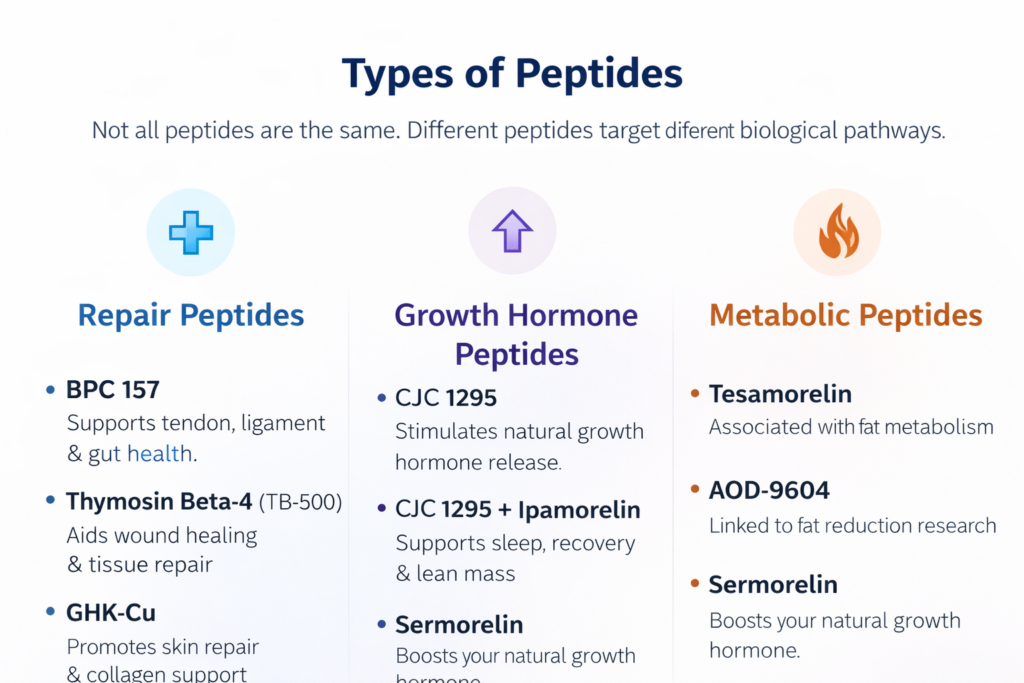
Types of Peptides
People often think all peptides are the same. They are not. Just like one shoe does not fit everyone, one peptide does not suit every goal. Different peptides target different biological pathways. Some support tissue repair, some influence growth hormone release, and others focus on fat metabolism or skin health. Each peptide works on a specific receptor and produces a defined effect.
Repair Peptides
- BPC 157 (BPC 157 peptide): Commonly discussed for tendon, ligament, and gut support. Many searches around BPC 157 benefits focus on tissue recovery and inflammation control.
- Thymosin Beta-4 (TB-500): Used in regenerative settings to support wound healing and cellular migration. Often associated with muscle and soft tissue repair.”
- GHK-Cu (Copper Peptide): Promotes skin repair and collagen support. Frequently used in peptides for skin formulations.
Growth Hormone Peptides
- CJC 1295: A CJC peptide designed to stimulate natural growth hormone release. Popular in recovery and performance programs.
- CJC 1295 Ipamorelin: A combined protocol often searched as CJC Ipamorelin. Used to support sleep quality, recovery, and lean mass.
- Sermorelin (Sermorelin acetate): Encourages the body to release its own growth hormone instead of replacing it.
Metabolic Peptides
- Tesamorelin peptide: Associated with fat metabolism and often searched under peptides for fat loss.
- AOD-9604: A modified fragment linked to fat reduction research.
How It Works
Peptides bind to specific receptors on cells. The cell receives the signal and activates a targeted response such as repair, hormone release, or collagen production. The peptide then breaks down naturally after completing its signaling cycle.
What Is Peptide Therapy Used For?
People don’t search peptide therapy for fun. They search it to solve a clear problem: slow recovery, low energy, stubborn fat, aging skin, or poor sleep. The key point is this. One peptide does one main job. That is why peptide injections are usually planned around a single goal, not a random “stack.”
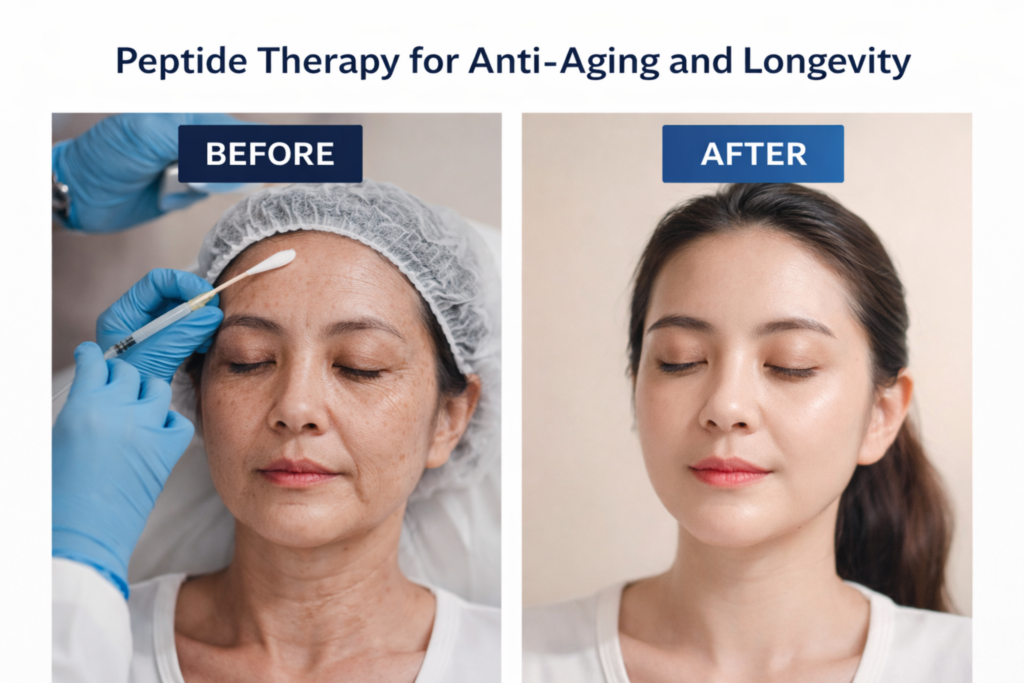
Peptide Therapy for Anti Aging and Longevity
This is the most misunderstood use case. “Anti aging” clinics often use peptides to support sleep quality, body composition, skin quality, and recovery. That is not the same as stopping aging.
Drugs
- CJC 1295 (CJC peptide): Used in programs that aim to support growth hormone signaling. People often pair it as CJC 1295 Ipamorelin to target sleep and recovery, not instant cosmetic change.
- CJC Ipamorelin: Popular search term for the same pairing. It gets attention for “recovery” claims, but quality and safety depend heavily on the source and medical oversight.
- Sermorelin / Sermorelin acetate: Often positioned as a “gentler” growth-hormone-support option since it signals the body to release its own hormone. Real outcomes still vary person to person.
- BPC 157 (BPC 157 peptide): Mostly discussed for repair and recovery support, which is why people search BPC 157 benefits. Human safety data is still limited, and regulators have raised safety concerns with compounded versions.
- Tesamorelin peptide: Often pulled into peptides for fat loss conversations, but its approved medical use is narrower than how “fat loss” ads describe it.
How Peptide Therapy Supports Anti Aging and Longevity
- Supports natural growth hormone balance: Peptides such as CJC 1295 and Sermorelin are used in some peptide therapy programs to stimulate the body’s own growth hormone rhythm, which influences sleep, recovery, and tissue maintenance.
- Preserves lean muscle mass: Muscle loss accelerates with age.
Growth-hormone–related peptides may help maintain strength and body composition when combined with resistance training and adequate protein intake. - Improves skin structure and repair: Certain peptides for skin support collagen production and barrier repair, helping improve elasticity and reduce visible signs of aging.
- Supports metabolic stability: Better insulin sensitivity, improved sleep quality, and steady energy levels all contribute to long-term longevity and healthier aging patterns.
Duration
Most clinic-led peptide therapy plans run in set cycles of several weeks, then a review based on symptoms, sleep, body composition, and lab markers. If you are searching for peptide therapy near me, ask clinics one direct question: “What is the review point and what decides if I continue?”
Benefits
- Better sleep depth and recovery for some people using growth-hormone–signaling peptides
- Body composition support in structured programs (training, protein intake, sleep consistency)
- Tissue recovery support is why BPC 157 gets attention in sports and rehab circles
- Skin-focused benefits usually come more from peptides for skin in topical routines than from injections
Precautions (especially if you have sensitive skin)
- Skip “research use only” peptide sources. Purity and dosing can be unreliable.
- Injectable peptides can trigger immune reactions in some cases. Watch for hives, swelling, wheezing, or rapid worsening redness. Get medical help fast if this happens.
- Some peptides flagged by regulators carry concerns like immune reactions, flushing, fast heart rate, or blood sugar effects. Share your medical history and meds before starting.
- Don’t self-experiment with BPC 157 dosage or combine multiple peptides early. “Stacking” raises risk and muddies what causes side effects.
- If you are in the UAE and comparing peptide therapy cost, ask what is included: consult, labs, follow-ups, and pharmacy sourcing standards.
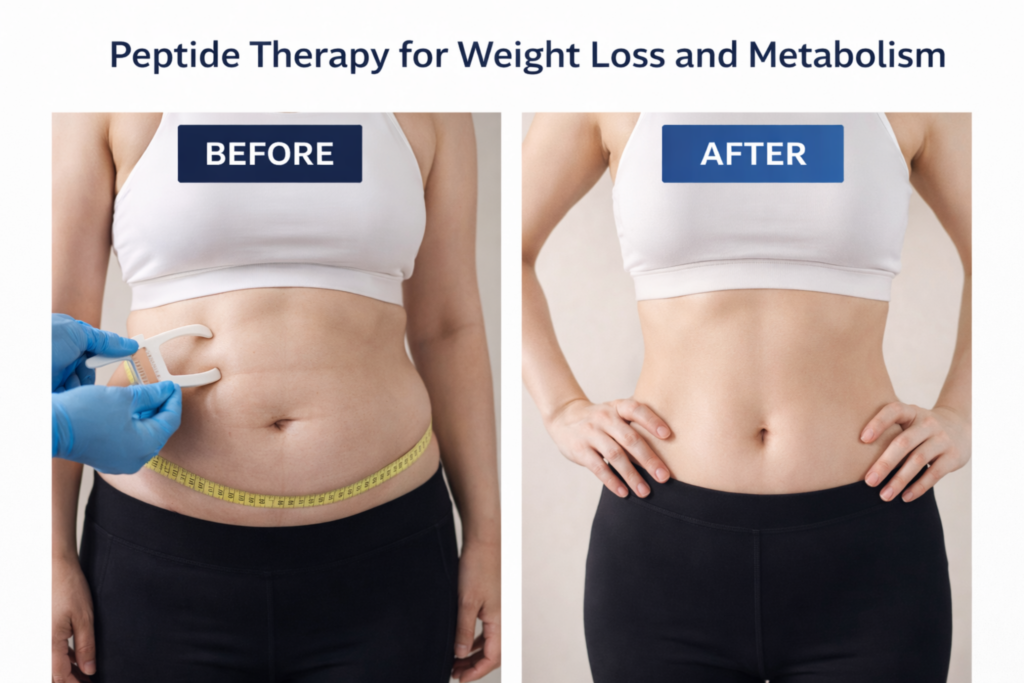
Peptide therapy for weight loss and metabolism
Peptide therapy for weight loss uses targeted amino acid chains to influence appetite, metabolism, and blood sugar control. Unlike basic appetite suppressants, these treatments act on hormone pathways linked to satiety and insulin response. Options like Semaglutide and Tirzepatide have shown average weight reductions of 15 to 20 percent in clinical trials over 9 to 18 months when combined with medical supervision and lifestyle changes. Most metabolic peptide therapy plans use structured peptide injections.
Drugs
- Semaglutide (Ozempic, Wegovy): A GLP-1 receptor agonist that slows digestion, reduces hunger, and increases fullness after meals. It supports steady calorie reduction over time.
- Tirzepatide (Mounjaro, Zepbound): A dual GIP and GLP-1 receptor agonist that improves insulin response and lowers appetite signals. Trials show strong average weight loss compared to single-pathway therapies.
- AOD-9604: A fragment of growth hormone studied for fat metabolism. It targets lipolysis, meaning fat breakdown, without broadly stimulating growth hormone levels.
- CJC-1295 / Ipamorelin: Growth hormone–releasing peptides used in some peptide therapy plans to support sleep quality, recovery, and lean mass retention during fat loss phases.
- MOTS-c: A mitochondrial peptide researched for its role in energy regulation and improved insulin sensitivity.
How Peptide Therapy Supports Weight Loss
- Appetite regulation:
GLP-1–based therapies increase satiety and reduce cravings by mimicking natural hormone signals. - Metabolic support:
Certain peptides influence fat breakdown and energy use, especially when paired with structured diet and training. - Blood sugar control:
Improved insulin sensitivity stabilizes energy and supports metabolic balance.
Duration and Treatment Timeline
- Initial response:
Appetite changes often begin within 2 to 4 weeks. - Visible weight change:
Measurable weight reduction typically appears between 4 and 8 weeks. - Clinical results window:
Most studies track results over 9 to 18 months for sustained outcomes. - Treatment cycles:
Many metabolic peptide therapy plans run in structured phases, often 12 weeks or longer, followed by reassessment. - Long-term use:
Some medications are continued for maintenance under medical supervision to prevent weight regain.
Benefits of Peptide Therapy for Weight Loss and Metabolism
- Reduced appetite:
GLP-1–based treatments like Semaglutide and Tirzepatide increase fullness after meals and reduce frequent snacking. - Improved insulin sensitivity:
Better blood sugar control helps reduce fat storage and supports steady energy through the day. - Fat loss over muscle loss:
In structured programs, certain peptides help preserve lean mass while reducing body fat. - Lower visceral fat:
Some therapies target abdominal fat, which links closely to metabolic risk. - Improved metabolic markers:
Patients often see changes in fasting glucose, HbA1c, and triglyceride levels when monitored properly.
Precautions
- Get medical screening first:
Review thyroid history, pancreatitis risk, gallbladder issues, and current medications before starting peptide therapy. - Use approved treatments only:
Not all options marketed under peptides for fat loss are approved for weight management. - Expect possible side effects:
Nausea, digestive discomfort, fatigue, and injection-site irritation are common with GLP-1–based peptide injections. - Choose regulated providers:
If searching peptide therapy near me, confirm pharmacy sourcing and sterile standards.
Peptide Therapy for Wound Healing and Regeneration
Peptide therapy is often discussed for tissue repair and recovery support. In regenerative settings, certain peptides are studied for their role in wound healing, collagen formation, and inflammation control.
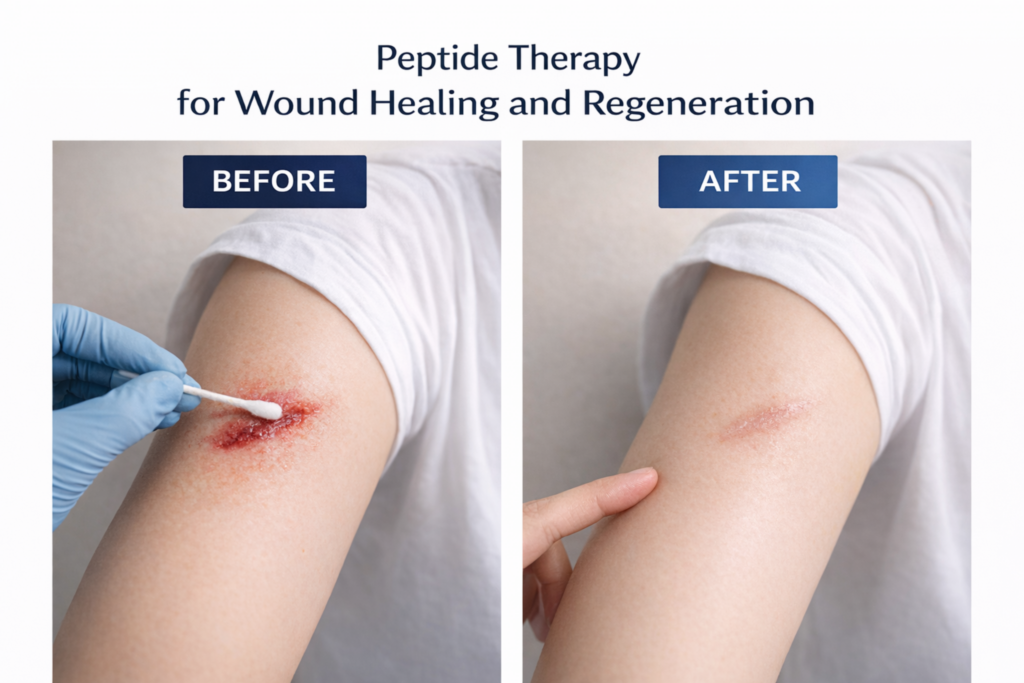
Drugs used for repair programs
- BPC 157 (BPC 157 peptide): Known in recovery circles for supporting tissue repair signals. Most talk around BPC 157 benefits focuses on tendons, ligaments, and gut lining support.
- Thymosin Beta-4 (TB-4, often called TB-500): Linked with wound repair signaling and cell migration in research settings. Often discussed for skin and soft-tissue healing support.
- GHK-Cu (Copper Peptide): Used more in skin repair and scar support. Common in peptides for skin products for barrier recovery and elasticity.
How it supports wound healing and regeneration
- Signals repair pathways: Peptides bind to receptors and “switch on” repair instructions instead of masking symptoms.
- Supports collagen and tissue strength: Repair peptides are discussed for collagen formation and tissue integrity.
- Helps the skin barrier reset: Skin-focused peptides support barrier recovery, which matters for sensitive skin.
Duration and timeline
- Days 1 to 3: Early phase. Goal is calming the wound environment and limiting irritation.
- Days 4 to 21: Active repair phase. New tissue and collagen lay down. Most visible changes happen here.
- Weeks 3 to 12: Re-modeling phase. Scar texture and strength improve slowly. This is where patience matters most.
Benefits
- Faster recovery feel: Less “stuck” healing in minor wounds and irritations for some users.
- Improved skin quality during healing: Better texture and barrier comfort when used in a clean routine.
- Scar support: Remodeling and elasticity support is a common goal with skin peptides.
Precautions
- Do not self-inject: Many injectable peptides are not approved for wound care, and quality varies by source.
- Avoid mixing multiple peptides early: Stacking makes side effects harder to trace.
- Sensitive skin rule: Patch test topical peptides first, and stop if burning, hives, or swelling starts.
- Ask the clinic direct questions: What is the product source, sterility standard, follow-up plan, and stop rule?
Peptide Therapy for Muscle Growth and Performance
Peptide therapy for muscle growth and performance involves using specific peptides to support recovery, boost lean muscle, and enhance overall training results. Popular peptides like CJC 1295 and BPC 157 peptides are commonly used to improve recovery times and muscle strength.
Drugs
- CJC 1295 (CJC peptide): Used in some clinics to stimulate growth-hormone signaling for recovery and training support. FDA notes limited clinical data and reports serious adverse events tied to compounded CJC-1295.
- CJC 1295 Ipamorelin (CJC Ipamorelin): A common pairing marketed for sleep and recovery, since both act on growth-hormone pathways. FDA highlights immunogenicity risk with certain compounded peptide injectables.
- Ipamorelin: A growth hormone secretagogue studied for growth-hormone release activity in vivo. Evidence for muscle gain outcomes in real-world “performance” use is not well established.
- Sermorelin (Sermorelin acetate): A GHRH analogue discussed in hormone-support programs. It appears on WADA’s prohibited list under GHRH and analogues.
- BPC 157 (BPC 157 peptide): Popular online for injury recovery, which people link to training consistency and peptides for muscle growth goals. Reporting highlights scant evidence and unresolved safety questions, and anti-doping guidance treats it as an unapproved substance.
How Peptides Support Muscle Growth and Performance
- Boosts Protein Synthesis & Muscle Growth:
Peptides like CJC-1295, Ipamorelin, and IGF-1 LR3 stimulate growth hormone, supporting muscle fiber creation and hypertrophy. - Faster Muscle Recovery:
BPC-157 and TB-500 accelerate tissue healing and reduce inflammation, enabling quicker recovery and more intense training sessions. - Improves Fat Metabolism:
AOD-9604 and Tesamorelin aid in fat breakdown, improving muscle definition and body composition. - Enhanced Strength & Stamina:
There are many Peptides supplements which improve blood flow and cellular repair, boosting endurance and overall physical performance. - Stronger Connective Tissues:
Peptides support collagen production, enhancing ligament and tendon strength, and lowering injury risk.
Duration
Peptide therapy for muscle growth and performance usually follows cycles of 8 to 12 weeks. Initial improvements in strength and recovery are often noticeable within 4 to 6 weeks. However, substantial gains in muscle mass and body composition typically require 3 to 6 months of consistent therapy and a structured fitness plan.
Benefits
- Recovery support: Growth-hormone pathway peptides are used with the goal of improving recovery between sessions.
- Sleep-linked training consistency: Many “performance” protocols sell better sleep and better recovery, which can improve adherence to training plans.
- Injury downtime reduction claims: BPC-157 is marketed for soft-tissue recovery, though evidence and safety remain uncertain.
Precautions
- Anti-doping risk: Many peptide hormones and related substances, including CJC-1295, sermorelin, and ipamorelin, appear on WADA’s prohibited list.
- Compounding safety: FDA flags risks for compounded CJC-1295, including immunogenicity concerns and reports like increased heart rate and systemic vasodilatory reactions.
- Grey-market sourcing: Reporting describes widespread “research use only” peptide sales with contamination and dosing risks, especially with self-injection.
- Stacking risk: Combining multiple peptides raises side effect uncertainty and makes reactions harder to trace.
Save Up to 5% on Peptide Therapy at The Experience Store!
Get a discount on your next peptide treatment through TES coupon voucher available on QYUBIC.Don’t miss out, claim your offer today!
Step‑by‑Step Process of Peptide Therapy
Peptide therapy follows a structured approach to maximize benefits while minimizing risks. Here’s a breakdown of the typical process:
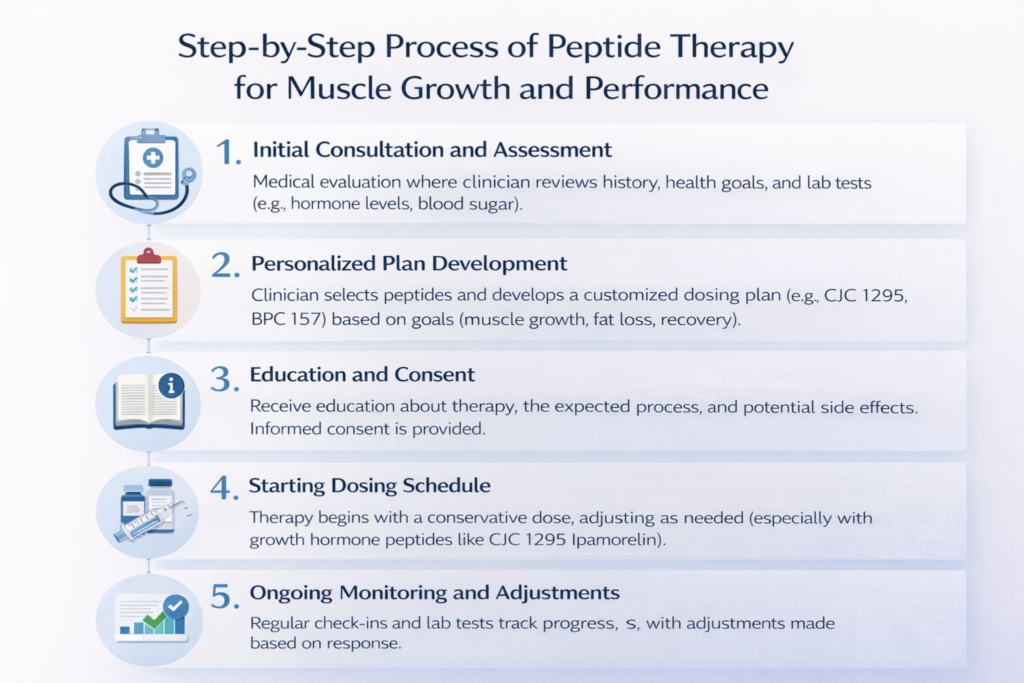
- Initial Consultation and Assessment
The process starts with a medical evaluation where the clinician reviews your medical history, current medications, and health goals. Tests may include hormone levels, blood sugar, lipids, liver and kidney function, and overall nutrient status to tailor the therapy. - Personalized Plan Development
Based on the assessment, the provider selects the most suitable peptides (e.g., CJC 1295, BPC 157 peptide) and creates a customized dosing schedule. This may involve peptides for muscle growth, fat loss, or recovery depending on your specific needs. - Education and Consent
The next step involves educating you about what to expect during therapy, how the peptide injections work, possible side effects, dosing methods, and follow‑up care. You’ll also provide informed consent before treatment begins. - Starting Dosing Schedule
Treatment begins with a conservative dose to minimize risks. Some peptides may require gradual dosage increases, especially those affecting growth hormones like CJC 1295 Ipamorelin. - Ongoing Monitoring and Adjustments
Regular check‑ins and lab tests track your progress, allowing adjustments to the peptide type, dosage, or frequency based on your body’s response and the goals set. After the therapy cycle (usually 8-12 weeks), results are reviewed and further adjustments are made if necessary.
Best Peptide Therapy in UAE at Discounted Price at The Experience Store
Peptide therapy in Dubai and the UAE does not have a one‑size‑fits‑all cost. Many clinics price based on the type of peptide, treatment goals, and duration rather than a flat menu, because each peptide therapy plan must be medically tailored. Most local providers charge anywhere from about AED 950 to AED 2,500 or more per cycle depending on peptide type and protocol.
At The Experience Store (TES), peptide therapies are prescription‑based, so pricing is determined after a medical review. You receive a free 15‑minute consultation with a doctor who evaluates your goals (e.g., weight, muscle growth, recovery, skin quality) and then recommends the right peptides and duration. TES does not charge a separate labour or treatment fee; you pay only for the peptides prescribed for your personalized plan, and the clinic coordinates the doctor consultation for you.
Pricing Table
| Peptide Type / Therapy | Approx. Cost in UAE (AED) | Notes |
| Growth‑signal peptides (e.g., CJC‑1295 + Ipamorelin) | ~1,300 – 1,750 | Cost per cycle varies with dose and duration |
| Recovery / repair peptides (e.g., BPC‑157) | ~1,500 – 1,750 | Depends on vial count and cycle length |
| Metabolic peptides (e.g., Tesamorelin) | ~5,500 – 6,000 | Often higher due to complexity |
| Mitochondrial or emerging peptides (e.g., MOTS‑C) | ~3,800 | Specialized metabolic support |
| Smaller supportive peptides (e.g., GHK‑Cu, TB‑500) | ~1,500 – 3,000 | Healing and skin recovery targets |
These figures are based on pricing ranges from peptide providers in Dubai clinics; actual TES prices are provided after doctor consultation.
Why Choose TES Wellness?
- Free Expert Consultation: TES offers a complimentary 15‑minute doctor call to assess your condition, goals, and history before any peptide is recommended.
- No Upfront Treatment Charges: You pay only for the peptide prescription, no separate labor or hidden fees for the treatment plan.
- Doctor‑Led Protocols: A UAE‑licensed doctor reviews your profile and decides the peptide types, doses, and duration tailored to you.
- Convenient Process: After consultation scheduling, the doctor contacts you at your preferred time no need to find your own medical provider.
- Safe Sourcing: TES supplies peptides based on prescriptions, ensuring they follow local medical standards.
- Transparent Pricing: Pricing is personalized and clear after consult‑to‑prescription, rather than vague list pricing.
FAQs
What is peptide therapy and how does it work?
Peptide therapy involves using short chains of amino acids to stimulate specific biological responses, such as muscle growth, recovery, or skin repair. Peptides like CJC 1295 and BPC 157 peptide help regulate hormones and support various body functions.
Who is peptide therapy suitable for?
Peptide therapy is suitable for individuals seeking improved recovery, enhanced muscle growth, or skin rejuvenation. It is especially effective for those dealing with inflammation, joint pain, or looking to combat the effects of aging, with peptides like BPC 157 and CJC 1295.
When will I start seeing results?
Results vary depending on the peptide used. For muscle growth or fat loss, improvements may be noticed within 4–6 weeks. BPC 157 benefits and recovery effects can show within a few weeks, while peptide therapy for skin may take up to 3 months for noticeable improvements.
Do I need a doctor’s consultation before starting peptide therapy?
Yes, a doctor’s consultation is necessary before starting peptide therapy. Peptide injections require medical oversight to ensure safety, appropriate dosing, and to choose the right therapy, such as CJC 1295 Ipamorelin or BPC 157 peptide.
Who should avoid peptide therapy?
Individuals with underlying health conditions such as heart disease, diabetes, or hormonal imbalances should avoid peptide therapy unless advised by a healthcare provider. Pregnant or breastfeeding women should also avoid using peptide hormones or related therapies like Sermorelin without medical consultation.
Conclusion
In conclusion, peptide therapy offers a targeted approach to enhancing recovery, muscle growth, and overall health. Whether you’re considering CJC 1295, BPC 157 peptide for recovery, or peptides for skin to reduce aging signs, the benefits are clear. However, it’s crucial to consult a medical professional before starting therapy, ensuring safe and effective use. With the right guidance, peptides can play a significant role in improving your well-being and performance, helping you achieve your health and fitness goals.